When Mystery Illuminates (and When It Doesn’t)
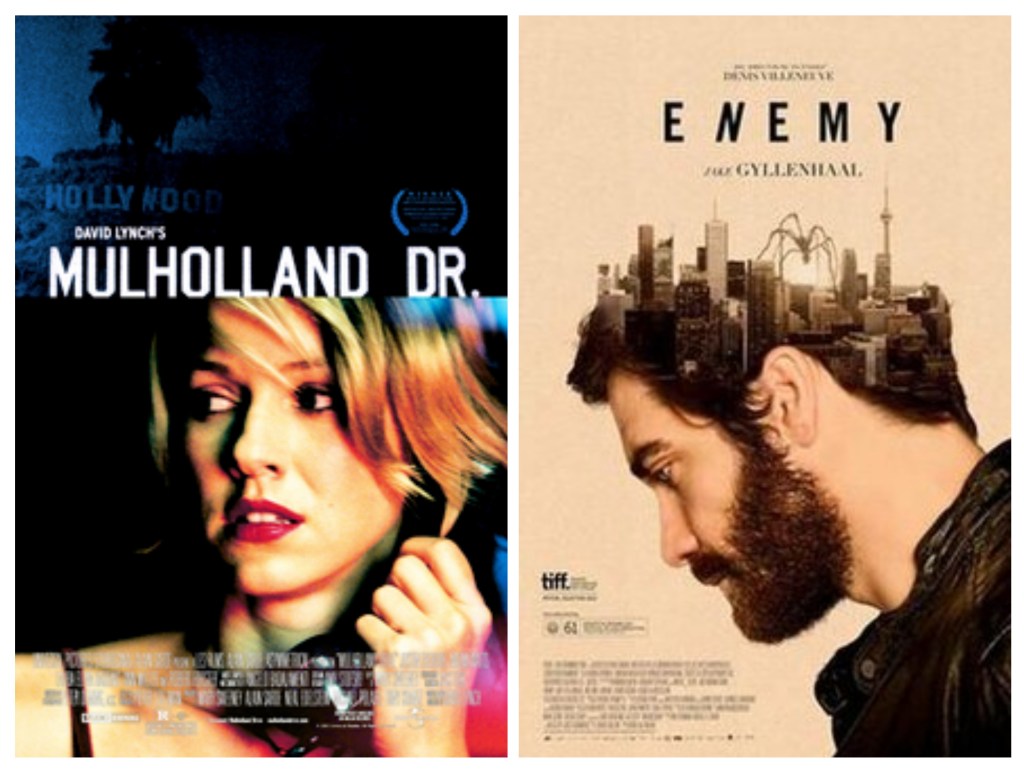
When used with care, ambiguity can become one of cinema’s most powerful tools. It transforms a story from something we watch into something we feel. Ambiguity invites participation, asking us to make sense of what we see and to project ourselves into it. But when it fails, it shuts us out. Two films that show both sides of this tension are Mulholland Drive (2001) and Enemy (2013).
As someone drawn to emotional storytelling, I value films that link abstraction to feeling. Mysteries should matter to the characters who live within them. Both Mulholland Drive and Enemy explore fractured identity, but only one transforms confusion into understanding. The other, though technically precise, loses us to its obscurity.
Ambiguity in Film
Ambiguity is not the same as confusion, it is an openness to interpretation. It gives the audience room to connect their own experiences to the film. Purposeful ambiguity replaces certainty with emotional depth, balancing mystery with coherence. It leaves questions unanswered and offers emotional clarity in its place. The facts may remain uncertain, but the feelings take the forefront.
Mulholland Drive: Ambiguity as Invitation
David Lynch’s Mulholland Drive uses confusion to draw us closer. Its dream logic, fractured timelines, and shifting identities are not puzzles to solve but emotional states to inhabit. The story begins as a Hollywood fantasy: Betty arrives in Los Angeles full of optimism and meets Rita, a woman who has lost her memory. By the time we realize Betty and Diane are the same person, the film’s logic collapses, leaving only emotional truth in its place.
Lynch uses ambiguity to express what is left unsaid. The blurred identities and fragmented timelines mirror Diane’s own disorientation. The confusion becomes an external representation of her denial, guilt, and longing. Even as the world unravels, her emotions remain in focus.
The Club Silencio scene captures this perfectly. When the magician reveals that “there is no band,” the illusion shatters, but our connection to the character is deepened. The performance is fake, yet the grief it exposes is real. Through rhythm, sound, and image, Lynch builds coherence out of contradiction. We may not grasp every detail, but we feel Diane’s heartbreak. Ambiguity, in his hands, becomes revelation through emotion.
Even the side plot mirrors this logic. In the diner scene, the man’s fear of the monster in the alley becomes real. Like Diane, he is forced to face what he has tried to avoid. In both stories, Lynch treats ambiguity as a confrontation.
Enemy: Ambiguity as Alienation
Denis Villeneuve’s Enemy explores similar themes of identity and doubling but with a colder touch. The film follows Adam, a withdrawn professor who discovers his double. What begins as curiosity turns into obsession. Like Lynch, Villeneuve blurs reality, but his version of feels designed. We’re meant to admire the riddle, not feel it.
The problem is not the mystery but its function. In Enemy, ambiguity becomes something to decode rather than a state to feel. The film invites intellectual analysis but resists emotional connection, and in turn, we observe Adam’s confusion without sharing it.
The visual style of Enemy reinforces this distance. The washed out yellow hue, rigid framing, and slow pace create tension but also detachment. The emotional weight is predetermined.
The film’s atmosphere tells you what to feel, but not why it matters. Even when Adam meets his double, the encounter feels procedural. The giant spider at the end is haunting, but it chills intellectually more than it moves. Villeneuve’s surrealism is effective in conveying Adam’s repressed emotional state; we understand his denial, frustrations, and desires, but it leaves us without an emotional anchor.
The Human Side of Mystery
Both films use uncertainty to explore identity, but they lead to opposite emotional ends. In Mulholland Drive, ambiguity humanizes. In Enemy, it isolates.
 Fragments & Focus
Leave a comment